Thursday, February 21, 2013

Count that kererū!


NatureWatch NZ is joining forces this year with Forest & Bird's Kiwi Conservation Club, Kererū Discovery and Banks Peninsula's Kaupapa Kererū, to count as many kererū (New Zealand wood pigeons) as we can. We're asking everyone (and that means you!) to get out and look for kererū from 24 February to 4 March this year. And you don't need to stop. By all means keep on counting afterwards.

Why count kererū?
Because they big, beautiful, iconic birds that are declining in numbers in parts of New Zealand. We need to know more about where they are doing well and where they are not, and why, to better understand how to look after them. Plus, they are really important as dispersers of our largest-seeded native trees, and of long-standing cultural importance to Maori (and admired by New Zealanders generally). Together, we can collect the observations needed to keep a close eye on New Zealand's kererū.

Do you want to keep it simple?
When you join this year's kererū count, you've got a couple of options. If you like to keep things nice and simple, but just a little bit less useful, you can jump straight to Forest & Bird's Kiwi Conservation Club kererū count webpage. This site is targeted at kids and asks for everyone to note down when and where they see kererū, how many they see, and what the birds were doing. All their counts are archived later on NatureWatch NZ using just the first name of each observer (you can explore all the 2011 counts in the NatureWatch NZ project, Count that kererū!.

Or, you can make your counts even more useful
If you would like to add some more details to your counts, including photos of the birds or the plants they were feeding on, you should add your observations straight to NatureWatch NZ's Count that kererū! project, and, if you're on Banks Peninsula, to the Kaupapa Kererū Banks Peninsula Kereru Community Count project.

On these projects we encourage you to add the following tags and other details to your observations:
  • "observation type: casual" for when you see kererū while out doing other things.
  • "observation type: search" for when you count a kererū while out specifically looking for kererū
  • When you have specifically looked for kererū and not found any, please enter this as an observation with the tag "observation type: search" and the "Sought but not found" box checked. "Sought but not found" is in the "click for more details..." section when you add observations.
  • If you were out looking for kererū, please also note how long you were searching. It's most helpful to do this by adding duration to your observation's tags, e.g., "duration: 30min"
  • If you were walking about rather than stationary, you can add a radius to your site on the map by adding a number in metres to Accuracy under "Where were you?".
(We're busy adding drop down lists and custom fields and other shiny things to NatureWatch NZ to make entering these details simpler in future, but unfortunately these won't quite be ready for the 2013 kererū count.)

Adding these extra details to your observations makes it much easier for scientists to figure out how our kererū populations are doing. Knowing whether or not you saw kererū when you were out looking for them is much more informative than just noting down where you see them. Why? Because it clearly shows us the places where kererū are absent or rarely seen. Otherwise, we don't know whether there are no kererū in an area or just that no kererū counter visited the area to look.

We also encourage you to add observations of the plants (fruit, flowers, or leaves) that you see kererū feeding on. You can add these as separate observations to the Count that kererū! project too, after you have entered a kererū observation. You can turn on "ID Please" if you'd like help identifying the plants. All NatureWatch NZ webpage links are stable so you can copy and paste the web link (URL) from your plant observation webpage into the description of your kererū observation if you wish.


Happy counting!

Thursday, February 14, 2013

NatureWatch NZ hits 10,000 observations in its first 5½ months


Light the fireworks and release the streamers, NatureWatch NZ just blasted past its 10,000th observation added since it launched on 27 August 2012. Our 10,000th new observation was of a New Zealand falcon, made by new user eolsi. The first 10,000 NatureWatch NZ observations were contributed by 209 users, who have added observations of 2,486 species and higher taxa. An impressive 7,137 of these observations include photos, some being the only photos of their species that show up in Google searches.

It's a great start, and just the tip of the iceberg for what we can all contribute to knowledge of NZ nature. Here are some of our favourite treasures and surprises among the 10,000.

Category: What is that weird thing?!

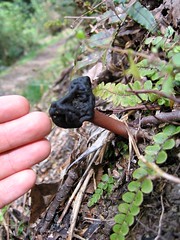
Winner: the pink, stalked slime mould from wbnz’s wood pile in Stewart Island

Honourable mention:
myxonz's alien sub-woofer Plectania fungus.
grahame's "Black Hairy Travis Thing".
jon's Doris the nudibranch.
nikbaines' bird's nest fungus.


Category: Colourful and then some

Winner: the nudibranch Tambja verconis from the Poor Knights observed by land_and_sea

Honourable mention:
gailtv's observation of a sky blue mountain top flatworm (which we still haven't identified).
land_and_sea's observation of the black and electric blue nudibranch Tambja morosa from the Poor Knights.
Category: Is it even there?

Winner: the near invisible rock caterpillar of Dichromodes ida observed by nikbaines

Honourable mention:
thomasjwalsh's observation of the "giant, camouflaged, fortified silverfish" like thing, Nesomachilis.
stho002's observation of the nearly transparent Eucalyptus leaf mining caterpillar, Phylacteophaga froggatti.
jon's observation of the moss moth Lysiphragma howesii.

Category: Most amazing behaviour

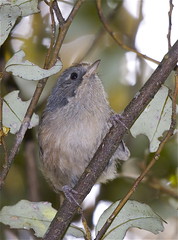
Winner: a young bellbird feeding a fledgling silvereye observed by nikbaines

Honourable mention:
Grahame's observation of a pukeko running off with a black swan chick.
steveattwood's skilfully photographed series of observations of a pair of great crested grebes nesting on Lake Forsyth.
tevoleus's observation of a tui singing to its reflection in the window.


Category: Yikes, biosecurity

Winner: a suspiciously Didymo-like green algae observed on Stewart Island, where Didymo is currently absent, by colinmeurk. After people saw this observation, DOC staff went back to the spot to collect some for identification. Luckily, it was something else.


Honourable mention:
land_and_sea's observation of young balloon vine, Cardiospermum grandiflorum, spreading in Northland. This is a weed people are keen to get rid of.
andrewpughnewzealand's observations of the newly arrived potato eating pest, the Hadda beetle, in Auckland. This was first spotted in New Zealand in 2010, unfortunately too late for eradication to be feasible.

Category: The biggest discovery

Winner: the first time the poo moss Tayloria tasmanica had been found outside of Tasmania, and a new addition to the New Zealand moss flora, observed on Stewart Island by colinmeurk

Honourable mention:
nikbaines's observation of peripatus in Dunedin city.
tony_wills's observation of a parasitic erythraeid mite attached to the back end of a kowhai moth. This is the first time mite biologist Rob Cruickshank has heard of a parasitic mite on a caterpillar in New Zealand.
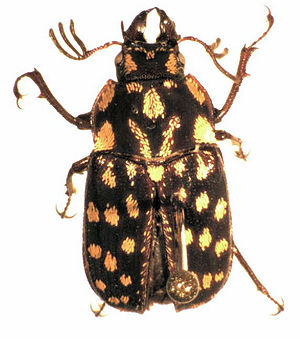
jon's serendipitous observation of a rare golden stag beetle, Mitophyllus foveolatus, on a black beech trunk.

You can clearly see from our first 10,000 NatureWatch NZ observations that New Zealand nature is far more quirky and colourful and bizarre, and fascinating, than the usual marketing images of tui and cabbage trees. It's a big wild world we have to explore. We hope you'll join us in adding the next 10,000 observations.

Thursday, February 7, 2013

There's gold in them there hills

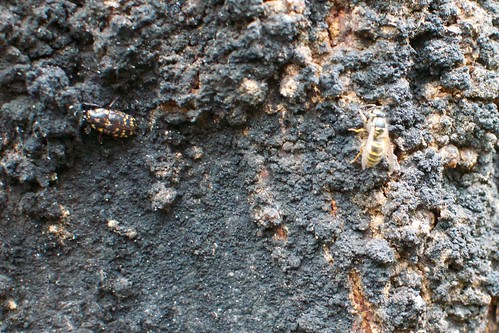
Here's a nice example of NatureWatch NZ at work. In hills of the northern South Island lives an elegant beetle, the most colourful and easily identified of New Zealand's stag beetles. Its scientific name is Mitophyllus foveolatus. Very little is known about its biology, and according to entomologist Stephen Thorpe, "very few individuals of this species have even been seen alive in the wild in recent decades". And I accidentally found one.


I inadvertently found one of these black and gold beetles late last month. Regrettably, I didn't realise it at the time. I casually snapped a photograph of a wasp on a honeydew scale infested black beech tree while in Hanmer. I wanted to know which Vespula wasps were in the area. I only realised after I got home that there was a amazing beetle on the same trunk. I posted my observation to NatureWatch NZ as Coleoptera, "ID Please", as I had no idea what it was. Stephen recognised it and identified it less than a day after I posted my observation.


Famous New Zealand entomologist (and inventor of daylight savings) George Vernon Hudson, wrote in 1934 that Mitophyllus foveolatus was common on Mount Arthur in northwest Nelson "and thought it was probably attached to alpine beeches" (Holloway 2007). Stephen speculates that they may feed on the honeydew on the beech trees. This raises the ominous possibility that few people have seen these beetles in recent decades because of competition with the exotic Vespula wasps that now plague New Zealand beech forests and monopolise the beech honeydew.

Or, perhaps, hopefully, it's just that not enough people are out looking in the right places and the right times to see these beetles. This is where you come in. If you are out and about in the South Island high country, keep an eye out on the black sooty honeydew covered beech trunks for these distinctive little flecks of beetle gold.

Tuesday, February 5, 2013

New Zealand's got a new poo moss!

Hold your nose with excitement! Colin Meurk just added an observation to NatureWatch NZ of a new poo moss for New Zealand! It's a moss called Tayloria tasmanica and was previously known from Tasmania and Macquarie Island[see comment below about Macquarie Island]. Colin discovered the distinctive moss on his trip late last month to Stewart Island. Landcare Research moss expert, Allan Fife, identified the specimen.

Poo mosses (family Splachnaceae) are world famous (among moss enthusiasts) for often growing on dung and rotting animals and enticing flies to disperse their spores. Poo mosses one of the few examples of a "lower plant" using insects for dispersal. Many flies are big fans of poo and rotting carcasses, just like poo mosses, and fly just where poo mosses want their spores to go.

Have a close look at Colin's photo. It's a distinctive and attractive moss. If you're from down south, it would be fantastic to get more observations added to NatureWatch NZ. It would also be great to know more about it, including where it grows, whether it is associated with poo or carcasses in New Zealand, and whether flies are dispersing its spores. We also don't know yet whether this is a rare vagrant blown from Tasmania or a permanent member of the Stewart Island flora.
new NZ poo moss
New Zealand's first record of Tayloria tasmanica
NatureWatch NZ observation and photo by Colin Meurk

New Zealand has an expert on these mosses at the University of Auckland, Anne Gaskett. You can hear Anne talking about her research on Tayloria mosses on Radio New Zealand's Our Changing World programme. Te Papa botanist Leon Perrie also has a nice blog post with more about poo mosses in New Zealand.

Thursday, January 24, 2013

Tips for nature watching with a camera

There are some amazing photos on NatureWatch NZ, taken by some talented photographers (for example, be amazed by the observations of grahame and steveattwood). Still, NatureWatch NZ is a site for nature watching, and you don't need to be a pro-photographer to capture really useful images. Many of you will already have an adequate camera on your mobile phone or in your bag. Here are some tips for nature watching with a regular camera.
NatureWatch NZ observation
With this nice photo, NatureWatch NZ user Stephen Thorpe was able to ID it as a green soldier fly in the genus Odontomyia.
NatureWatch NZ observation by Grahame.

Why photos? Photos are helpful for several reasons. Photos confirm for other people that you saw what you say you saw. That gives NatureWatch NZ reliable data for understanding NZ ecology. Photos can record interesting behaviours and interactions (like Nicola Baines' incredible observation this month of a bellbird feeding a young silvereye). And, photos allow other people to identify the things you don't know.

One of the game changing things about NatureWatch NZ is its "ID please" feature. You post the photos and other members of the NatureWatch NZ community will do their best to figure out what it is. It's a miraculous thing for those of us used to crawling through dusty scientific identification keys. What you might need a few hours, or a few years doing a science degree, to identify, someone else might happily identify with a glance. Usually, all you need are those good photos. Keep reading for some handy tips, like holding your camera up to your binoculars.
More...

Get close, stay focused
If you're photographing a skittish creature, take a photo or two as soon as you see it before it might fly off. In this age of digital photography, there's no harm in taking a few photos and keeping the good ones. Still, once you've got a usable photo from where you're standing, try to get as close as you can. Fill the frame of the image as much as you can with the species. This is especially important with lower-resolution cameras. Fit as much information in your photos as you can.
NatureWatch NZ observation
A nice photo of a hebe flower but not of the native bee pollinating it. Get as close as you can.
NatureWatch NZ observation by Colin Meurk.

Make sure your camera is focusing on the species. Yes, it's obvious, but a camera's autofocus can often decide to focus on something in the distance rather than the small critter you're photographing. When I'm photographing small flowers or insects with a regular camera or mobile phone, I often need to hold my hand flat in the photo at the distance I want it to focus, then remove my hand before finishing the photo. Most cameras these days also have a macro button or function that you have to turn on so the camera will focus close up. Otherwise, everything close up will be blurry.

Add a scale
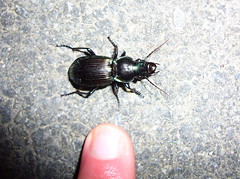
Exactly how big something is, whether it be an insect or a leaf, can be important for figuring out what species it is. It's therefore very helpful to include a scale in at least one of your photos. That can be something formal like a ruler, or a coin. Regular Bic ball-point pens are also a handy scale if nothing else is at hand. Like a hand. I usually just use my hand or a finger. You don't need a scale in every picture (they can ruin pretty pictures). Just one or two so we know how big something is.
NatureWatch NZ observation
A ballpoint pen used as a scale for a photo of a fruiting holly.
NatureWatch NZ observation by Jon Sullivan.

You may already have a high-powered telephoto or macro lens in your pocket
Regular cameras and mobile photo cameras often have lens openings about the size of your eye. That means they can take quite acceptable photos looking through anything your eye looks through, like binoculars, a hand lens, or a microscope. Inexpensive binoculars can work just fine. That means that you don't need to be a pro-photographer with a lens the size of a vacuum cleaner to get identifiable photos of birds. You also don't need a fancy macro lens and flash kit to get identifiable photos of small insects. Is your flash too bright when photographing through a hand lens? Cover it with a paper towel or white handkerchief. Got no flash on your phone? Use a torch. Don't expect to win photography awards, but you can get your species identified, and the photos often look pretty good.
NatureWatch NZ observation
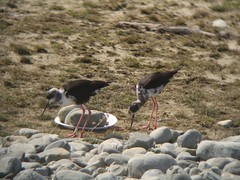
Juvenile black stilts photographed through binoculars.
NatureWatch NZ observation by Jon Sullivan.
NatureWatch NZ observation
A striped mosquito photographed with an iPhone held up to a microscope at 20X magnification.
NatureWatch NZ observation by Jon Sullivan.

Photograph all the bits
If you're photographing a species you don't know, it's important to photograph all the parts that might be important for an identification. For plants, that usually means both sides of the leaf, the stem, and flowers and fruit if there are any, as well as the whole plant. Even a couple of old dried up flowers or fruit can be really handy if they're on a plant.
NatureWatch NZ observation
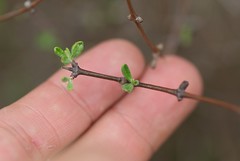
The stem and stipule of a taupata photographed with an iPhone through a 10X botanical hand lens.
NatureWatch NZ observation by Jon Sullivan.

Some species are just plain tricky and a little knowledge goes a long way. For Coprosma species, a big group of NZ native plants, it's important to know the shape of a little strap of tissue called a stipule that wraps around the stem between each pair of leaves. It can also be important to photograph the domatia, the little holes in some Coprosma leaves that leaf-cleaning mites live in. For insects, things like wing venation and the patterns of hairs can be important so its important to get your focus right. For some flies, there's a little fold called the scutellum between the top of the thorax and the abdomen that's important. For mushrooms, the pattern of the gills can be important to know, so make sure you don't just photograph to the top of the mushroom.

The more you get to know NZ nature, the more familiar you'll get with the right things you'll need to photograph to ensure an ID. It's all part of the journey. But don't panic. Most of the big common things around you can be identified just fine with normal photos.

When photos aren't enough
I should note that some species cannot be identified to species with regular photos. You might only be able to get an insect identified to a genus or family using a photo. That can still be useful. However, if you find something odd that you think is important, like a new pest insect in your neighbourhood, it's also useful to take a specimen. Insects can be preserved long-term in ethanol, or just stuck in the freezer for a few months. Plants can be pressed and dried in newspaper squashed under a few books.

With a specimen, you can photograph other more esoteric parts of it later if someone on NatureWatch NZ asks about it, or you can send the specimen to an expert for identification (e.g., at Biosecurity NZ) should the users on NatureWatch NZ suggest it. Most of the time, a few photos are fine, but if the ID really matters to you and you're not familiar enough with the group to know what features to photograph, consider collecting a specimen. (Note that you need a permit from DOC to collect on conservation land.)


So, there you have it. I hope you found some helpful hints. Have I missed something? Do you have favourite tip you'd like to add? You can add a comment below.
NatureWatch NZ observation
Some photos take a lot of skill and luck, like this amazing photo of the fast moving little forest bird, the brown creeper.
NatureWatch NZ observation by Steve Attwood.

Nature Watching in 2013

What does the new year have in store for NZBRN and NatureWatch NZ? Quite a lot. I'm glad you asked. I think you'll be excited by some of the new things on the way.

Back to school
We're keen to make NatureWatch NZ a useful resource for schools. Imagine if New Zealand's school grounds became a network of nature watching hotspots! This year, we will be trialling NatureWatch NZ in a selection of Canterbury and Westland schools, thanks to funding from the Brian Mason Trust. We are considering a few tweaks to the way NatureWatch NZ works to make it easier to use in the classroom. We especially want to allow teachers to create and administer their pupil's classroom user accounts on the website.

Shiny new features
Our developers are currently running to catch up with the fast-paced development of iNaturalist, the amazing open source project on which we base NatureWatch NZ. Look forward to a major NatureWatch NZ upgrade in the next couple of months. It will bring shiny new features like custom fields (so you can enter just what you need for your project) and more advanced ways to search for observations by location, among many other refinements.

Go on, count that kereru
NatureWatch NZ is partnering with Forest and Bird and WWF NZ this year for their nationwide kereru count. We'll be releasing more information about that soon.

This year, we'll also complete the migration of all the legacy NZBRN data and users, which will add another hundred thousand or so observations to NatureWatch NZ. And we've got a few more surprises up our sleeves.

Thanks for your support through 2012. You got NatureWatch NZ off to a great start! And welcome to everyone who discovers NatureWatch NZ for the first time in 2013.
NatureWatch NZ observation
The remarkable observation this month of a bellbird feeding a young silvereye.
NatureWatch NZ observation by Nicola Baines.

Wednesday, November 7, 2012

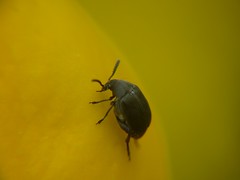
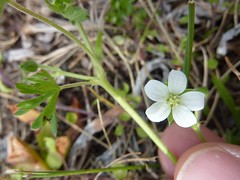
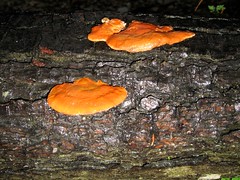
ID if you please

Here's another taste of some of the amazing plants, animals, and fungi that NatureWatch NZ users have posted as "ID Please" and then been identified by other NatureWatch NZ users. If you've got your own photos of strange New Zealand critters and creepers, you can post them on NatureWatch NZ and learn more about them. If you're a whiz at these things, you can help people identify the outstanding observations waiting for identifications on the ID Please list.